Wednesday, February 27, 2013
Tuesday, February 12, 2013
REX TREMENDAE in present and history.
Two weeks ago we had the great honor of learning from and being mentored by the renowned choir conductor and chief of the Musiciens d'Europe orchestra. A few students of string instruments were called to perform together guided by the professionals and headed by M. Curti in the performance of Mozart's Requiem. I loved learning the piece! Even though my alto clef sight reading is terrible and I don't own an alto instrument, giving it a go was the best choice.
Mozart wrote Requiem just prior to his death. He didn't complete the orchestra version, which was completed after his death by his student Sussmayr. As the name suggests, it is a requiem, a mass honoring the dead. Ironic that though Mozart was writing it for an unknown buyer, he was probably keeping the death of his parents in mind. And he met with his own death in the process.
One of the most beautiful (and most difficult to play) movements is the famous Kyrie (pronounced Key-ri-e) which also influenced Sussmayr's finishing the Requiem in the Lux eterna (eternal light). One of the most beautiful pieces where the alto plays an important role is the first movement of the Offertorium, Domine Jesu.
The movement I enjoyed best in Requiem was Rex Tremendae (King of Tremendous Majesty) for it's complex rhythm arrangement for the Alto. The music of classical era was primarily created for the soprano (played by the violins) and the basso continuo (Double Bass & Celli) and the viola or alto was 'filling in'. At the era, the alto had the liberty to fill in according to the rhythm of the soprano or basso continuo, thus a privilege to have an orchestra score carefully thought out for us. Mozart's writing of music is elaborate and accommodates two sopranos, his wife Constanze and his previous lover and Constanze's sister Aloysa, a prominant Soprano of the times.
At the end of our week's study and analysis of Mozart musical style, Jean-Petit Bello, witnessing his Maman and teacher play in an ensemble without running out of the audience to greet her, was mesmerized by the inclusion of a flute and oboe along with the strings.
As I took out my sheets today and played a professional recording, my heart leapt at Rex Tremendae, to think of the Tremendous King, the author of all music, the director of Man's heart and the conductor of life's symphony, who commissioned us to carry on the music of hope (and delights in listening to Mozart's music) I couldn't help but be in awe of the grandeur and majesty of the Eternal.
May your hearts be filled with awe and hope as you listen to this.
Mozart wrote Requiem just prior to his death. He didn't complete the orchestra version, which was completed after his death by his student Sussmayr. As the name suggests, it is a requiem, a mass honoring the dead. Ironic that though Mozart was writing it for an unknown buyer, he was probably keeping the death of his parents in mind. And he met with his own death in the process.
One of the most beautiful (and most difficult to play) movements is the famous Kyrie (pronounced Key-ri-e) which also influenced Sussmayr's finishing the Requiem in the Lux eterna (eternal light). One of the most beautiful pieces where the alto plays an important role is the first movement of the Offertorium, Domine Jesu.
The movement I enjoyed best in Requiem was Rex Tremendae (King of Tremendous Majesty) for it's complex rhythm arrangement for the Alto. The music of classical era was primarily created for the soprano (played by the violins) and the basso continuo (Double Bass & Celli) and the viola or alto was 'filling in'. At the era, the alto had the liberty to fill in according to the rhythm of the soprano or basso continuo, thus a privilege to have an orchestra score carefully thought out for us. Mozart's writing of music is elaborate and accommodates two sopranos, his wife Constanze and his previous lover and Constanze's sister Aloysa, a prominant Soprano of the times.
At the end of our week's study and analysis of Mozart musical style, Jean-Petit Bello, witnessing his Maman and teacher play in an ensemble without running out of the audience to greet her, was mesmerized by the inclusion of a flute and oboe along with the strings.
As I took out my sheets today and played a professional recording, my heart leapt at Rex Tremendae, to think of the Tremendous King, the author of all music, the director of Man's heart and the conductor of life's symphony, who commissioned us to carry on the music of hope (and delights in listening to Mozart's music) I couldn't help but be in awe of the grandeur and majesty of the Eternal.
May your hearts be filled with awe and hope as you listen to this.
Friday, February 8, 2013
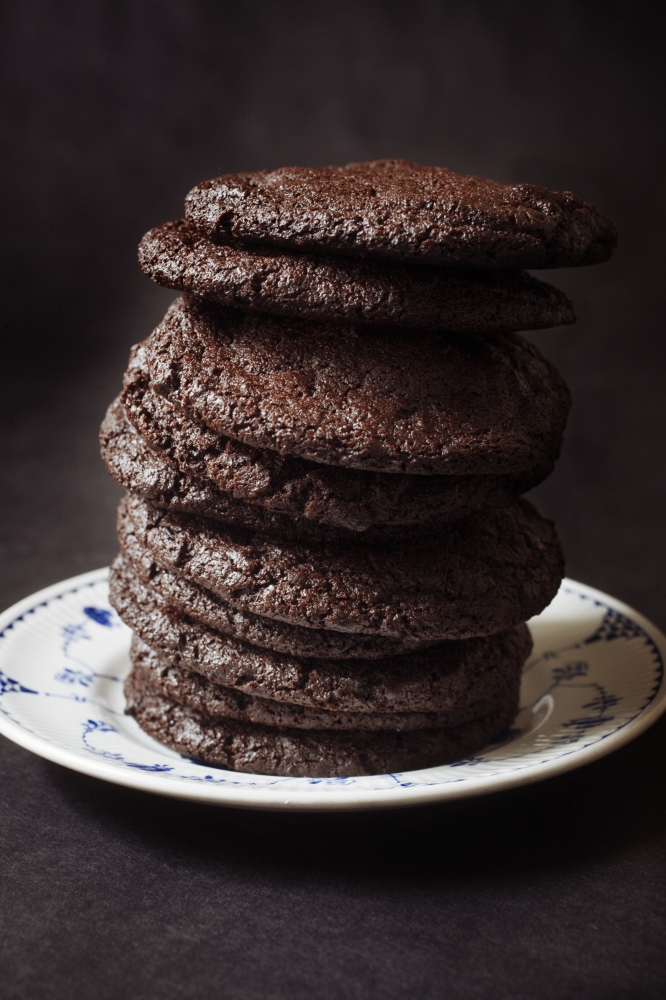
Crumbling cookies - how not to bake!
How lovely it is to gift cookies, especially when a 3yo cuts them or rolls them! But sadly, I'm not gifted with baking skills. At least not when it comes to baking-stovetop.
A and I once made Nutella cookies (where we didn't have to cook) and I should've stuck to it. The other day we made 'baking powder' cookies and they ended up tasting like Tandoori Roti. And today, on the impulse of making *round* cookies, we plunged into total disaster.
Ok, so here's how NOT to make cookies.
1. DON'T listen to your whiney son say HE wants to cut cookies THIS time.
2. If you've didn't get to THOROUGHLY follow step 1, don't despair. Just follow along.
a. Get any recipe off the internet. One with those yummy looking cookies stacked up high that make your eyes glow and mouth water.
b. Grab a sheet of paper, or more appropriately the son's scribbling notebook that's always lying around nearby and scribble down the ingredient list to making 15 servings of cookies (no, we don't want to waste perfectly good flour and oatmeal):
1/3 cup and 1 teaspoon butter softened
1 tablespoon and 2-3/4 teaspoon packed brown sugar
(not sure how much that is since we own no baking equipment!)
2 tablespoon and 2-1/2 teaspoon white sugar
etc..
etc..
If you don't own a wonderful kilo of packed brown sugar, don't caramelize any. Especially don't pick up what looks like a cup, and divided it into what looked like 3 equal parts. Don't randomly fill one of those three parts with sugar and put it on the pan to brown.
If you do insist on caramelizing, make sure you pour it out from the pan into a metal bowl. Turn around to get an egg (finally you reach a point where there is an entire number and not a fraction. It's the egg! Unless you make less than 15 servings where you will be required to add 3/4 of an egg. If you get to do that, write about it and let me know.)
When you turn around to get the egg, you will invariably hear crackling noises. Don't be alarmed. Those who reside in the dwarf planet Kitchen, do get accustomed to such noises. For those of us who are mere visitors, we get to realize at the point where we have to whisk the egg and caramelized sugar that the crackling noises were the caramelized sugar solidifying. Don't be dismayed! Just pick the bowl and heat it. And if you've already added the egg, don't bother. Just add the butter. When you begin to realize that an egg cooks when heated, take it off the heat immediately. A cookie made with cooked egg tastes pretty much the same (if not better) as a cookie made with whisked raw egg.
The dry part of the cookie is a cake-walk. Just combine the flour, the 1 cup and 1 tablespoon of oats and salt. Add that to the creamy mixture.
Never mind if the mixture is characterized by one solid bulge of brown sugar. Just get a pestle and bang it into a thin sheet. If it crumbles, tell me how you got that done. Fortunately I suggest you to use metal bowls as they are sturdier to resist the blows of the metal pestle.
Once you're tired of banging the solid sugar, you will realize that the creamy part wasn't sufficient to hold the entire cookie dough together. Don't run to check the recipe on the computer. Just add more butter. No need to divide the cup into further parts, just add the butter by instinct. It will begin to resemble more a dough and look less like breakfast cereal. At that point pick a clump carefully and press it between your palms. Beware that the solid parts of the sugar (though they add great taste) hurt the hands a bit. If you prefer to roll them on a greased surface, make sure you do so carefully because they hardly hold together.
Grease a pan (if, like me, you are an owner of two pans, one of which contains lunch and the other is available for cookies) Cover it till the butter is warm. Carefully place the cookies on the pan and cover for few minutes. When you figure out how many minutes that should be, call me. Uncover the pan and turn the cookies around. If they are slightly burnt on one side, turn off the gas and let heat for some more minutes. Don't be too dismayed. If the cookies are stuck to the pan because of the overwhelming presence of the solid sugar, just pry them off using any kitchen tool. Let cool, either in the pan or outside.
Sit back (if you've got the time) and enjoy the someplace-sweet and someplace-salty cookies.
And if you insist on taking cookies as a gift, get some nice ones from the store near your home.
Subscribe to:
Posts (Atom)